Who Wins the Hand? How to Settle Close Calls in Poker


Who Wins the Hand? How to Settle Close Calls in Poker
When the cards are on the table and the pot is big, few moments in poker are as tense as figuring out who actually wins the hand. Even experienced players can get confused when two hands look almost identical. Should you look at the suits, the highest card, or the sequence? Here’s a step-by-step guide to determining who takes the pot in the most common close-call situations.
Know the Hand Rankings – The Foundation of Every Decision
Before you can settle a close hand, you need to know the basic ranking of poker hands. These rankings apply to most popular variants, including Texas Hold’em and Omaha. From strongest to weakest, the order is:
- Royal Flush – Ten through Ace of the same suit.
- Straight Flush – Five cards in sequence, all of the same suit.
- Four of a Kind (Quads) – Four cards of the same rank.
- Full House – Three of a kind plus a pair.
- Flush – Five cards of the same suit, not in sequence.
- Straight – Five cards in sequence, not all of the same suit.
- Three of a Kind (Trips) – Three cards of the same rank.
- Two Pair – Two different pairs.
- One Pair – Two cards of the same rank.
- High Card – When no other hand is made.
Once you know this order, you can quickly tell which type of hand is stronger. But when two players have the same hand type, that’s when things get interesting.
When the Hands Look Alike
Two Players Have a Flush
If both players have a flush, the winner is the one with the highest card in the flush. For example, if both have hearts but one player’s highest heart is an Ace and the other’s is a King, the Ace-high flush wins. If all five cards are identical, the pot is split.
Two Players Have a Straight
Here, the highest card in the sequence decides the winner. A straight from 9 to King beats a straight from 8 to Queen. If both players have the same straight, regardless of suits, it’s a tie.
Two Players Have a Full House
With a full house, compare the three of a kind first. Three Kings beat three Queens. If those are the same, then compare the pair to break the tie.
Two Players Have Four of a Kind
This one’s simple: the player with the higher four of a kind wins. If both have the same quads (possible in community card games), the fifth card, known as the kicker, determines the winner.
Two Players Have a Pair or Two Pair
For a single pair, compare the rank of the pair first. If those are equal, use the kickers in descending order. For two pair, compare the higher pair first, then the lower pair, and finally the kicker if needed.
The Kicker – The Overlooked Decider
The kicker is the card that doesn’t form part of the main hand combination but is used to break ties. Many players overlook it, but it can make all the difference. Example: Both players have a pair of Aces, but one has a King as a kicker and the other a Queen. The King kicker wins.
In community card games like Texas Hold’em, it’s possible for both players to use the same five cards from the board. In that case, there’s no kicker, and the pot is split.
Læs også:



Reading the Board Correctly
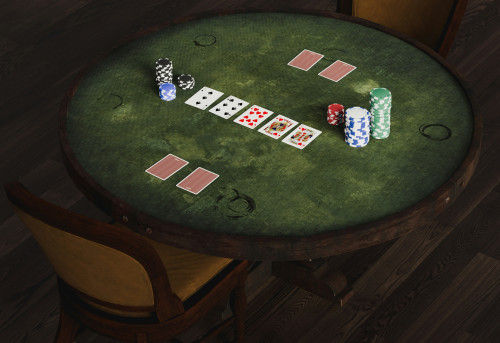
One of the most common beginner mistakes is overvaluing your hand compared to the board. If the board shows four cards of the same suit and you hold a low card in that suit, be careful—an opponent with a higher card in the same suit will beat you. The same goes for straights: if the board shows 5-6-7-8-9, everyone technically has a straight, and the pot is split unless someone can make a higher combination using their hole cards.
How to Check the Winner Step by Step
- Identify the hand type – Which category do each player’s five cards fit into?
- Compare the hand types – The higher-ranking category wins.
- If the hand types are the same – Compare the relevant cards (e.g., highest in a flush, three of a kind in a full house).
- Still tied? – Use the kicker.
- Everything identical? – The pot is split.
It might feel technical at first, but with a little practice, it becomes second nature.
Train Your Eye for Detail
To get better at judging close hands, review past hands or use online tools that show hand strength. Many poker sites offer free “hand replayers” that automatically compare hands and show the winner. The more you see, the faster you’ll learn to spot what decides the outcome—and avoid misreading your own hand.
It’s Not Just About the Cards
While hand rankings and rules are objective, poker is still a game of people. Reading your opponents’ reactions, betting patterns, and timing can be just as important as knowing the rules. But when it comes to the showdown, the cards always tell the truth—and with this knowledge, you’ll know exactly who wins the hand.
Læs også: